Artist Under 200 Followers CRUSHES Spotify Algorithm Using This Method
In an industry obsessed with follower counts and viral moments, a quiet revolution is happening. Artists with tiny followings are consistently outperforming major label acts on Spotify's algorithm. The secret isn't luck or connections, it's understanding exactly what Spotify's algorithm values and executing a precise strategy to deliver it.
This case study examines how artist Elara James, with just 155 followers, achieved over 3,000 daily streams and significant algorithmic playlist placements using a methodical approach that any independent artist can replicate.

The Case Study: Elara James and "Love Is Calling"
When Elara James released "Love Is Calling" on a Monday morning, she had fewer than 200 Spotify followers. Within one week, the song started getting over 3,000 streams per day.

The Foundation of Success: Strategic Execution Plus Song Quality
The cornerstone of Elara's success lies in the combination of strategic execution and genuine song quality. But here's the crucial point: song quality isn't measured by subjective opinion or industry gatekeepers. It's measured by listener behavior.
When people save "Love Is Calling" to their libraries and play it from the user profile, they're voting with their actions. This behavioral data tells Spotify that the song has genuine staying power, not just initial curiosity. The strategic release timing, playlist placement approach, and algorithmic understanding all work together, but they're only effective when built on a foundation of music that genuinely resonates with listeners.
The most sophisticated promotion strategy in the world can't save a song that people don't want to hear again. Conversely, a great song without proper strategic execution might never find its audience. Elara's success demonstrates what happens when both elements align perfectly.

Understanding Spotify's Algorithm: The Key Metrics That Matter
Spotify's algorithm evaluates songs based on multiple engagement signals, with two metrics standing out as primary indicators:
Save-to-Listener Ratio
This measures how many people save a song to their library compared to how many people listen to it. The optimal range is 2% to 10%, with higher percentages being better. Elara's ratio sits comfortably in the sweet spot.
A key note here is that algorithm playlists will have lower save ratios than running ads to your song from Instagram or Facebook.
Spotify knows what a good save ratio is for playlisting vs. running ads to your songs and accounts for it in their algorithm.

Skip Rate
If Spotify sees that people are not playing your song all the way through, this is also a negative signal for algorithm playlists. Once you get on genuine playlists, there is no gaming this metric.
Either a good percentage of people actually like your song or they don't.
How Playlist IQ Helps Jumpstart The Algorithm
Traditional playlist pitching services operate on a pay-to-reject model where artists spend money upfront, often wasting 70-90% of their promotion budget receiving rejections that provide no value. This approach can quickly drain promotional budgets while delivering minimal results.
Playlist IQ revolutionizes this process through its unique "respond first, pay later" model:
Key Advantages of Playlist IQ:

1. Risk-Free Pitching
Curators give initial interest responses for FREE, and artists only pay for feedback when curators express genuine interest in adding the song. This eliminates wasted budget on rejections, a common problem with platforms that charge upfront fees.
To be clear, artists are paying for feedback. However, the curator gives a response during the free review indicating whether or not they think the song would fit their playlist.
So if a curator pays for feedback & the playlist owner does not add their song, they would be going against their word they gave during the initial review and their Trust Score on the platform would go down.
The Trust Score is visible to all artists prior to submitting to any list and helps keep everyone honest on the platform.
This way, artists are not paying directly for playlist additions, but also not wasting 70-90% of their budget on rejection notes.
2. Quality Control Through Trust Scores
Each curator on Playlist IQ has a trust score based on their track record of staying consistent in their word to artists (i.e. adding songs when they say they would, not moving songs to unfavorable positions, not removing songs early from the list, etc.) This helps artists avoid curators who simply want to expose artists.
3. Advanced Filtering Options
Artists can filter potential playlists by:
- Genre and mood compatibility
- Estimated streaming ranges
- Follower growth rates
- Geographic targeting
- Price ranges
- Historical performance data
4. Pre-Release Submissions
Unlike many services, Playlist IQ allows submissions up to two weeks before a song goes live on Spotify. This enables artists to:
- Accumulate curator responses before release day
- Line up multiple playlist placements for immediate impact
- Build momentum that hits right when the song becomes available
5. Global Reach Without Geographic Bias
Contrary to industry myths, Spotify's algorithm doesn't prioritize US-based streams over international ones. What matters is the engagement metrics, regardless of geographic location. Playlist IQ's global network of curators helps artists tap into this worldwide potential.

The Strategic Monday Release: Timing for Maximum Impact
1. Reduced Competition
While most artists release on Fridays, Monday releases face significantly less competition for playlist curator attention and algorithmic testing slots.
2. Building Weekend Momentum
Songs released on Monday have five days to build streams and engagement before the weekend, when music consumption typically peaks. By Saturday and Sunday, these songs can already be gaining algorithmic traction.
3. Discover Weekly Positioning
Spotify updates Discover Weekly playlists every Monday. Songs that show strong engagement throughout the week are more likely to be included in the following Monday's Discover Weekly updates, often providing a secondary boost exactly one week after release.
4. Extended Promotion Window
A Monday release allows for a full week of focused promotion before the next wave of Friday releases creates noise in the marketplace.
Complete Release Strategy Checklist (2 Weeks Before)

2 Weeks Before:
- Finalize song and upload to distributor
- Create Playlist IQ account and set up pre-release campaign
- Research and filter relevant playlists using platform tools
Monday or Tuesday (Release Day):
- Confirm song is live across all platforms
- Activate approved Playlist IQ placements
Friday-Next Monday (Release Week):
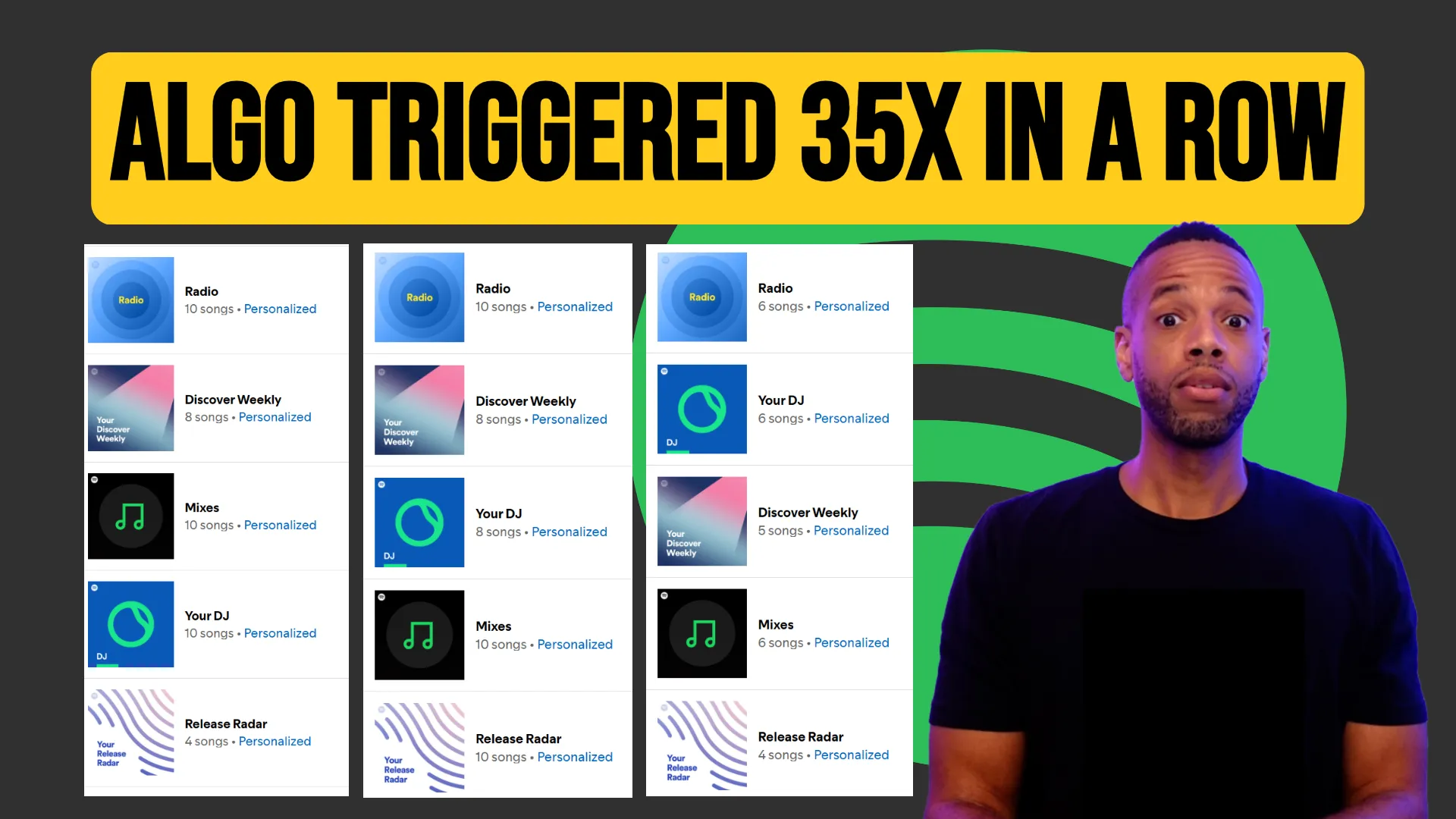
- Monitor for algorithmic playlist additions (Typically Radio playlists and Release Radar will hit first. This can happen the first or second week)
- Assess initial save-to-listener and streams-per-listener ratios
Post-Release Optimization Week 2
- Analyze Discover Weekly inclusion (Monday update)
- Double down on promotion if engagement ratios exceed targets (If you already know a song is working why not get as many plays per day as possible? This way you can get residual income long term as Spotify will likely include this song in more people's algorithm playlists when you boost it)
- Consider additional playlist campaigns if performance is strong
- Document learnings for future releases
Conclusion: Replicating Success Through Strategic Execution
Elara James's success with "Love Is Calling" demonstrates that follower count is largely irrelevant to Spotify algorithm success. What matters is creating music that genuinely resonates with listeners and executing a strategy that maximizes the song's opportunity to find its audience.
The combination of Playlist IQ's risk-free pitching model, strategic Monday releases, and data-driven promotion decisions creates a replicable framework. But this framework only succeeds when built on music that listeners actually want to save, replay, and keep in their libraries.
In an industry where major labels spend millions on promotion with mixed results, independent artists with modest budgets can compete by being smarter, more strategic, and more focused on what the algorithm actually rewards. Elara's 155 followers generated more engagement than many artists with 30,000+ followers because she understood the game and played it strategically while creating music that genuinely connected with listeners.
The future of music promotion isn't about who has the biggest following or the largest marketing budget. It's about who understands the algorithm best, creates music that listeners genuinely love, and executes most precisely. For independent artists willing to invest in themselves & follow the data rather than their emotions, the opportunity has never been greater.
These AI Music Tools Will Change Your Career!
Create any music you can imagine, then promote it like the majors all-in-one platform. 1 person = an entire record label with these tools.
Recent Posts


Smarter Music Marketing. Smarter Music Creation.
START HERE
LEGAL